


Bitcoin stolen during the third major Coldcard attack wave has begun moving from its original attacker addresses for the first time, with part of the funds converted into Ether through THORChain. Approximately 4.2 BTC was swapped into about 135 ETH as the attacker tested multiple routes through the cross-chain liquidity protocol. Several attempted swaps were refunded before being retried, while the resulting ETH was traced to a newly created Ethereum address. Wave 3 Funds Leave Original Addresses The movement marks…











Are We Quite Sure That Ethereum Isn’t A Security?
3.5 k views


The Securities and Exchange Commission (SEC) remains hazy on which cryptocurrencies are “securities'', versus “commodities”. Even Ethereum isn’t out of the woods.
The SEC is notoriously slow at providing regulatory clarity for the crypto industry. Besides its strange hostility toward permitting a Bitcoin spot ETF, the commission refuses to classify which cryptocurrencies are securities.
Instead, SEC chairman Gary Gensler continues to make vague statements on the matter that shake confidence in every altcoin holder. In a September conversation with The Washington Post, he stated that “most” cryptocurrencies are securities, while only “some” are commodities. No specific designations were made.
Ah. But that’s just a small-cap problem! Large-caps like Bitcoin and Ethereum have already been designated as commodities, right?
Not exactly.
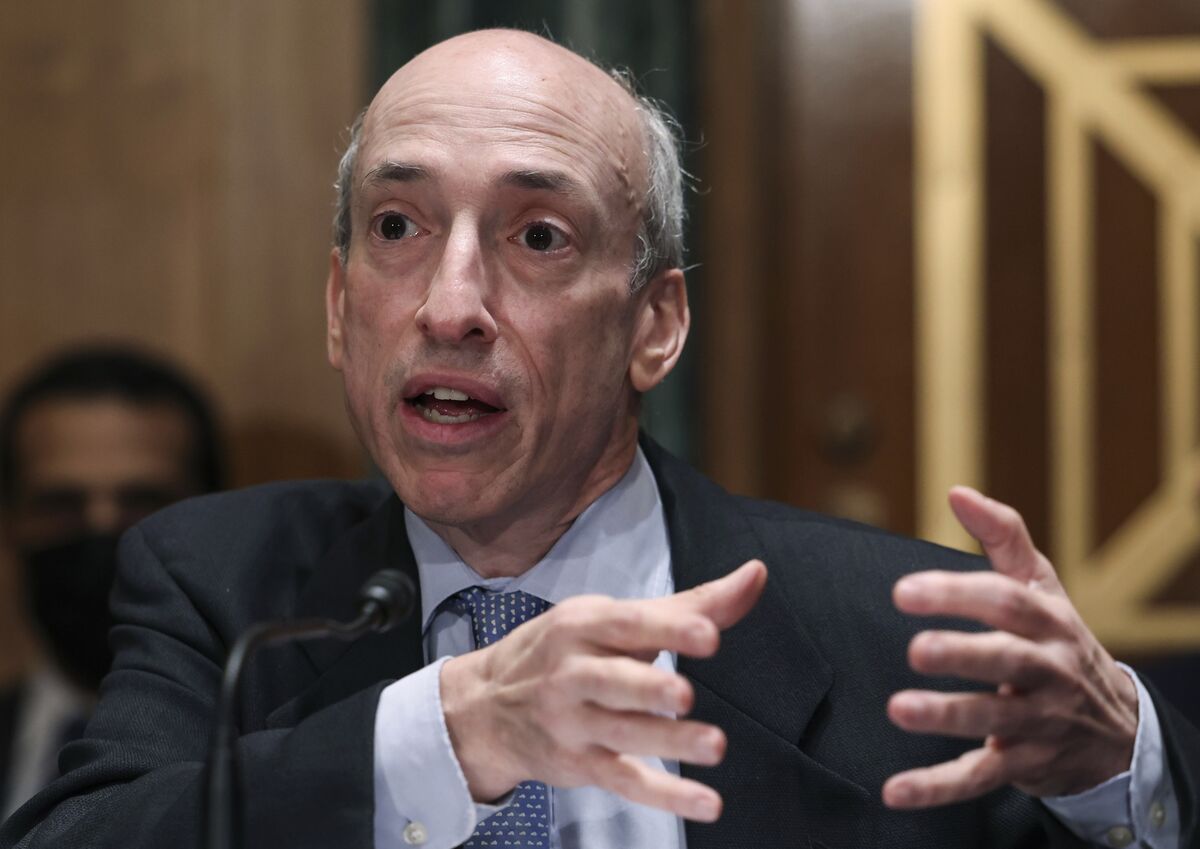
Gensler Sidesteps the Ethereum Question
On Squawk Box earlier this month, Gensler was directly asked for his view on whether or not Ethereum is a security. He completely avoided the question.
“I’m not going to speak to any one matter,” he said. “I’m the chair of a five member commission that’s also a civil law enforcement agency. We don’t get involved in these types of public forums talking about any one project.”
A fair answer, but hardly reassuring for Ethereans. While it doesn’t tell us that Ethereum is a security, it does clarify that debate on its classification is not over among regulators. After all, many in the crypto community had gotten the impression that it was.
In 2018, SEC Director of Corporation Finance William Hinman opined that neither Bitcoin nor Ethereum operated like securities. He said that given the current nature and decentralized structure of Ethereum, “sales of Ether are not securities transactions”. Indeed, Ether today functions much like a tool – the “digital oil” that powers various applications on the Ethereum blockchain.
The SEC chairman at the time – Jay Clayton – reiterated this viewpoint. Speaking with Congressman Ted Budd in 2019, he agreed that the nature of crypto transactions could evolve. For example, suppose a purchaser no longer expected any party to primarily carry out “managerial or entrepreneurial efforts” for a product. In that case, a digital asset may “not represent an investment contract under the Howey framework.”
But neither of these statements were concrete classifications. As Hinman emphasized in that same speech, the analysis of whether something is a security “is not static”. Both Gensler and Clayton have explained that such a classification essentially boils down to the Howey test.

The Howey Test
The Howey Test refers to the Supreme Court case SEC v. W.J. Howey Co. from 1946. Howey Company sold tracts of citrus groves to Floridian buyers, who would then lease back the land to Howey. The company then took sole responsibility for tending and selling the fruit they produced, from which both Howey and the landowners profited.
The problem? Howey did not register the relevant transactions with the SEC. The court would later determine that his leaseback arrangements were, in fact, investment contracts.
This case established the following criteria for determining whether something is an “investment contract” or “security”.
- There is an investment of money.
- The investment is in a joint enterprise.
- There is an expectation of profits from said investment.
- It will derive profit from the efforts of others.
Anything that meets these qualifications “passes” the Howey Test. It must be disclosed and registered under the Securities Act of 1933 and the Securities and Exchange Act of 1934.
The first act requires businesses to provide transparent financial statements for investors about their securities using a prospectus. The prospectus must include information about the business’s property, its executive management, and other things.
The second act governs securities transactions over secondary markets – including crypto exchanges. It requires registration and disclosure, margin trade limitations, and necessary audits. Generally, it is intended to bring transparency to the financial markets and reduce the potential for fraud.
Howey Test V. Ethereum
While he refuses to comment on specific tokens, Gensler has recalled the Howey test’s criteria numerous times when evaluating cryptocurrencies. He referred to this exact argument during his interview this week, following the Ethereum question.
“If you’re raising money from the public, and the public is in anticipation of profit based upon that promoter, sponsor, or group’s efforts, that’s within the securities laws.”
When these criteria are applied to Ethereum – particularly at initial offering – its ‘security’ argument grows stronger.
Ethereum featured an initial coin offering (ICO) in which buyers traded Bitcoin to a common blockchain address in exchange for Ether. That address belonged to the Ethereum Foundation – an organization aimed at marketing and supporting Ethereum and its infrastructure.
Led by whitepaper author Vitalik Buterin, the Foundation exerts vast – though not total – influence over Ethereum’s development. This was especially true in its earliest years when Buterin’s team of coders was the absolute backbone of Ethereum’s success.
Finally, though it deems itself a non-profit, Ether’s ICO was designed to raise money for the Foundation, anticipating Ether’s value would grow over time. In short, the details surrounding Ethereum’s inception tick every box that would make it a security under the Howey framework.
There already appears to be substantial agreement on that point. While teaching at MIT in 2018, Gensler stated that Ether “would have passed” the Howey test when launched in 2014. In 2019, Clayton suggested that almost all ICOs are securities. Even Hinman showed skepticism of Ethereum’s initial fundraising in his speech, arguing against its security status.
Therefore, the debate around Ethereum concerns whether it has become sufficiently decentralized to shake its security-like roots. While Hinman seems to think so, we don’t know if Gensler does.
/cdn.vox-cdn.com/uploads/chorus_image/image/63861722/garlinghouse.0.jpg)
Ripple V. SEC
More reason to doubt Ethereum’s “non-security” status comes from the ongoing Ripple V. SEC battle.
In December of 2020, the SEC charged Ripple and two of its executives with conducting unregistered securities offerings. In the commission’s opinion, XRP is, in fact, a security, while Ripple CEO Brad Garlinghouse maintains that it’s not. Garlinghouse’s main argument is that XRP does not constitute a stake in Ripple, nor does it rely on Ripple’s success to stay afloat.
During this lawsuit, Ripple has dug for internal SEC dialogues on what caused Hinman to view Ethereum as a non-security. As a result, they were recently granted access to internal SEC emails surrounding Hinman’s speech mentioned above. The company believes this evidence could help “rebuff the SEC’s claims about the nature of XRP.”
So far, however, their efforts have revealed unpleasant truths for both XRP and Ether. In October, the SEC had Hinman sign an affidavit confirming that his 2018 speech only reflected his personal views – not the commissions. What’s more, he even stated that the SEC has still not taken an official position on Ethereum.
“To the best of my knowledge, the Commission had not taken at that time, and still has not taken, any position or expressed a view as to whether offers and sales of Ether constituted offers and sales of securities,” said Hinman.
That’s not all: Last month, Charles Gasparino of Fox Business reported that the SEC had reversed its position on both Bitcoin and Ethereum’s “complaint” status during court testimony for the Ripple and SEC case. If true, it would be a total reversal on any indication from Hinman and Clayton that either Bitcoin or Ethereum are cleared as non-securities.
However, Bitcoiners generally have less to fear than Ethereans on this front.
What Makes Bitcoin Different
Current Classifications
Even if Gasparino’s claim applies to Bitcoin too, other regulatory bodies have quickly and decisively given it different classifications already.
For one, the Commodities and Futures Trading Commission (CFTC) has classified Bitcoin as a commodity. The classification lets the CFTC supervise Bitcoin futures trading on regulated exchanges. In turn, this is what made Gensler open to permitting Bitcoin Futures ETFs to launch in the US.
Meanwhile, the IRS has classified Bitcoin as property for tax purposes. As a result, any income earned due to Bitcoin increasing in value has been taxed like stocks and bonds since 2014.
Finally, Jay Clayton affirmed that Bitcoin was not a security during his term. He recognized that it is meant to replace sovereign money, calling it a “currency” and not a “security”. For El Salvador, Bitcoin has successfully become a national currency.
Among Bitcoin’s many classifications, “security” is not one. That’s because it differs from Ether and other cryptos in fundamental ways that cause it to fail the Howey test. These properties are collectively referred to as Bitcoin’s “Immaculate conception”.

The Immaculate Conception
Firstly, Bitcoin did not feature an initial coin offering. Instead, its proof-of-work consensus mechanism doubly served as a method for distributing the currency. As a result, the most competitive miners that provided the most cumulative “work” to the network were – and are – rewarded with all-new Bitcoin.
By comparison, Ethereum also uses proof-of-work but featured a massive pre-mine for its founders and early investors. So by this metric, even Dogecoin has a stronger argument for not being a security.
Bitcoin had no concentrated group primarily responsible for raising money or developing the protocol. Though there technically exists a “Bitcoin Foundation”, it was formed years after Bitcoin’s launch to clear it of various scandals. It is not integral to the protocol’s development, which has always been maintained by a decentralized group of developers worldwide.
Finally, the network’s founder – the anonymous Satoshi Nakamoto – has shown no intention to profit from Bitcoin’s creation. He is yet to sell a single Bitcoin from the network address that most presumed was his own. There is even evidence that he intentionally mined less Bitcoin than possible to give other miners a chance to earn in Bitcoin’s infancy.
Satoshi has now been missing from Bitcoin for over ten years and is no longer involved with the project in any capacity. With that, Bitcoin features no profit motive, trusted party, or fundraising activity that would suggest it passes the Howey test.
Regulatory Clarity = Investment
Whether or not the SEC ultimately goes after Ethereum, their mere threat is already driving investors away from the asset. Michael Saylor – whose company has invested billions of dollars into Bitcoin – has put nothing into Ether for precisely this reason.
“It’s universally acknowledged that Bitcoin is property,” he said in a recent interview with MMCrypto. “If you look at the entire crypto ecosystem, all the regulatory uncertainty and question marks are around securities. If there’s an ICO, a central organization, a premine, a foundation that has a treasury, and lots of hard forks that are happening every quarter, that starts to look more like a security in the eyes of a regulator.”

Conclusion: Ethereum is in Trouble
Some prominent crypto-community figures – including Global Macro Investor CEO Raoul Pal and Coinbase CFO Alesia Haas – believe current securities laws are outdated. They should either be updated to accommodate cryptocurrencies or have an entirely new regulatory framework.
However, both the former and current SEC chairman reject the idea, respecting the traditional definitions. Therefore, if Ethereum meets these classifications, it’ll have to adapt to time-tested securities standards. The law will most likely not bend to accommodate it or other cryptos.
Much of Ethereum’s fate likely still rests on the Ripple vs SEC case. When it filed the case, Joseph Grundfest – a former SEC commissioner – argued to Clayton that if XRP is a security, then Ether is no exception. He believed that no “material distinction” had been made by the SEC between the operations of each crypto.
Ethereum’s long-awaited transition to Ethereum 2.0 will likely only make things worse. As argued by attorney Jeremy Hogan, its new proof-of-stake functionality will strengthen the argument that holders expect a profit from Ether based on others’ efforts. In addition, issues about the network’s improvements due to a “semi-centralized entity” also came to mind.

Eth
Ethereum
$2.503,61
price
price

 4.84407%
price change

There’s a strong likelihood that Ethereans have an arduous regulatory battle to look forward to. Yet if Vitalik’s comments during Ether’s presale are anything to go by, he and other founders have probably spent years anticipating it.
“Ether is a product, NOT a security or investment offering… we make no guarantees of its future value.”
Previous
WMA: Bitcoin Drops Below $40k, but Hash Rate and Mining Remain Promisingly High
Next
How Meta (And Other Big Tech) Could Ruin NFTs For Everyone
Written by
Andrew Throuvalas
@andrew
465 posts
More author posts
Sam Bankman-Fried May Now Contact FTX Employees — But There’s a Catch
Lawyers for FTX’s disgraced former boss, Sam Bankman-Fried (SBF), have reached an agreement with prosecutors allowing him to contact certain FTX employees. Besides certain restrictions, the 30-year-old may contact such parties through a host of new mediums. The New Rules Updated terms surrounding Bankman-Fried’s contact restrictions were sent to Lewis A. Kaplan – a judge for the Southern District of New York – in a letter on Monday. Bankman-Fried’s lawyers said the updated conditions were a response to the government…
4 years ago
Uniswap Centralized? A16z Flexes Voting Power to Crush Governance Proposal
The popular decentralized exchange, Uniswap, is having one of its latest governance proposals stonewalled by the crypto venture capital giant Andreesen Horowitz (a16z). The ongoing proposal vote, which ends on February 10, is currently 38% weighed against the change – almost entirely due to the software investor. So Much for Decentralization The proposal, tabled by 0xPlasma Labs on February 2, would have Uniswap v3 deployed to BNB chain. To enable the deployment, the proposal chose to use Wormhole – an…
4 years ago
Silvergate Bank Hit With Fraud Probe Over FTX-Alameda Relationship
Crypto bank Silvergate is under investigation by the US Justice Department’s fraud unit for its dealings with FTX and its sister trading arm, Alameda Research. The investigation is reviewing accounts concerning both businesses, which have been widely accused of engaging in a multi-billion dollar fraud using FTX customer funds. What Happened at Silvergate? As reported by Bloomberg on Thursday, the La Jolla, California-based bank hasn’t been accused of any wrongdoing, and investigations could end without any charges being laid. However,…
4 years ago
Bitcoin Should be Banned in the United States: Charlie Munger
Berkshire Hathaway’s vice chairman, Charlie Munger, called for a ban on cryptocurrency in the United States on Monday, similar to the one in China. In an op-ed published with the Wall Street Journal, Munger argued that Bitcoin isn’t a currency, commodity, or security, but simply a form of gambling “ with a nearly 100% edge for the house. As such, the enactment of a federal law should ban such things from happening. Munger cited the Chinese communist party’s ban on…
4 years ago
Oxford Student Jailed After Stealing $2.4 Million Through Crypto Scam
Wybo Wiersma – a 40-year-old Oxford University graduate – has been sentenced to four and a half years in prison after scamming over $2 million in crypto from unsuspecting victims. Following his arrest in 2019, the Netherlands extradited the Dutchman back to the United Kingdom (UK) in 2021. Following a five-year investigation by the South East Regional Organised Crime Unit (SEROCU), he pled guilty on January 26 to the Oxford Crown Court. A Five-Year Investigation As reported by the Daily…
4 years ago
Like FTX, Celsius Used QuickBooks to Handle its Accounting
An independent examiner has revealed shocking details surrounding the inner workings of Celsius – a crypto lender that filed for bankruptcy in July 2022. The examiner claimed that Celsius did not operate by the business model that it presented to customers. He likened it to a Ponzi scheme, much like FTX – a company that happened to have used the same accounting software: QuickBooks. The Truth About CEL Token Per a filing from examiner Shoba Pillay on Tuesday, Celsius had…
4 years ago
Publish your own article
Guest post article. Guaranteed publishing with just a few clicks
START PUBLISHING ADVERTISE WITH USBrowse categories
Explore trending topics in the crypto community right now.
Bitcoin
Coldcard Wave 3 Attacker Starts Swapping Stolen Bitcoin for ETH Through THORChain
Bitcoin stolen during the third major Coldcard attack wave has begun moving from its original attacker addresses for the first time, with part of the funds converted into Ether through THORChain. Approximately 4.2 BTC was swapped into about 135 ETH as the attacker tested multiple routes through the cross-chain liquidity protocol. Several attempted swaps were refunded before being retried, while the resulting ETH was traced to a newly created Ethereum address. Wave 3 Funds Leave Original Addresses The movement marks...

Marius Bogdan Dinu  @bdinu89
 @bdinu89
13 hours ago  18 views
Katie Price Moves to Divorce Lee Andrews After $50M Crypto Claim Unravels
British television personality Katie Price is reportedly moving to divorce husband Lee Andrews after a cryptocurrency wallet he had presented as evidence of a $50 million fortune was found with a balance of about $3. Andrews had told Price he held roughly $50 million in cryptocurrency and would give her access to part of the money. He later provided a recovery phrase that a financial expert used on August 31 to access the wallet, which contained £2.22 at the time...

13 hours ago 20 views
Strategy Resumes Bitcoin Buying With $370M Purchase After Two-Month Pause
Strategy has returned to Bitcoin buying after more than two months without a disclosed acquisition, purchasing 4,603 BTC for approximately $370 million during the week ending August 30. The company acquired the coins at an average price near $80,380 and increased its holdings to 845,050 BTC, reversing part of the decline in its treasury caused by Bitcoin sales during June, July and August. Strategy entered the latest week with 840,447 BTC after making no purchases or sales between August 17...

3 days ago 30 views
Taliban Crypto Ban Still Blocks Bitcoin Trading in Afghanistan
Afghanistan’s Taliban-era prohibition on cryptocurrency trading remains in force, with the country’s central bank continuing to classify unauthorized online exchange activity as illegal and subject to enforcement. The nationwide crackdown began in August 2022, when authorities ordered money changers, individuals and businesses to stop trading cryptocurrencies including Bitcoin. Police subsequently arrested traders who defied the order and closed physical crypto businesses, dismantling a market that had expanded after the Taliban takeover disrupted Afghanistan’s access to the international banking system. Herat...

5 days ago 34 views
Ethereum
Ledger Patches Ethereum Signing Flaw Before Researchers Disclose It
Ledger has patched a vulnerability in its Ethereum hardware-wallet app that could allow a malicious dApp to replace a transaction during the approval process while the device continued showing users the transaction they originally reviewed. Security firm TestMachine disclosed the signature-substitution flaw on August 21 after reproducing it on Ledger hardware. Ledger had already shipped Ethereum app version 1.22.2 on August 12, with its release history listing security fixes for the update. Malicious dApp Could Change the Transaction Before Signing...
2 weeks ago 58 views
Jesse Pollak Pushes Back On Coinbase ETH Selling Criticism, Points To 150K ETH Treasury
Base creator Jesse Pollak has pushed back against criticism that Coinbase is selling ETH while benefiting from Ethereum, pointing to the exchange’s roughly 150,000 ETH corporate position and years of investment across the network. Pollak argued that Coinbase has held about 150,000 ETH through multiple market cycles, while describing the company as the largest ETH holder outside dedicated digital asset treasury companies by a wide margin. Coinbase’s latest regulatory filing backs up the scale of that position. The company held...
2 weeks ago 68 views
Tornado Cash Phishing Frontend Drains 1,010 ETH From User
A crypto user lost 1,010 ETH after following an old Tornado Cash bookmark into a phishing frontend that captured the private withdrawal credentials needed to access the deposited funds. The victim deposited the ETH into legitimate Tornado Cash contracts, but the malicious interface obtained the private note generated during the process. The attacker then used those credentials to withdraw the assets within roughly 12 hours without compromising the underlying Tornado Cash smart contracts. Phishing Frontend Targeted Private Withdrawal Notes Tornado...
Marius Bogdan Dinu
@bdinu89
@bdinu89
2 weeks ago 64 views
Ethereum New Address Growth Jumps 75% As Network Activity Accelerates
Ethereum’s network-growth metric has accelerated sharply in August, with new daily ETH addresses climbing from 121,210 on August 8 to 212,560 on August 16. The increase represents roughly 75.4% growth in eight days and adds another signal that activity is returning to the network. New-address creation measures the number of addresses appearing onchain for the first time rather than the number of unique people using Ethereum. A single user or automated system can control multiple addresses, so the metric is...
Marius Bogdan Dinu
@bdinu89
@bdinu89
3 weeks ago 87 views
Trading
5 Best Crypto APIs for Trading Bots in 2026
A crypto trading bot is a chain of dependencies. It reads a position, prices it, decides, places an order, and confirms settlement. Every one of those steps is an API call, and a failure at any single step stops the strategy. The provider choice shapes what a bot can actually do more than the strategy logic does. The common mistake is searching for one API that covers everything. No such API exists in 2026. Market data providers do not route...
2 weeks ago 104 views
Best Prediction Markets Alternatives: Outpoll, Limitless, Myriad, Manifold
Polymarket and Kalshi helped turn prediction markets into a mainstream trading category, but neither platform fits every trader. Access varies by country, market selection can lean heavily toward certain topics, and the tools available for entering, managing, and automating positions differ sharply across platforms. The strongest alternatives are not identical copies. Some emerging prediction markets platforms focus on professional order controls, some concentrate on fast crypto and financial markets, and others use onchain infrastructure or play-money forecasting. Users unfamiliar with...
3 weeks ago 117 views
How to Get a Funded Crypto Trading Account in 2026 Step by Step
A funded crypto trading account gives a trader access to more notional capital after they prove they can follow a firm’s risk rules. The usual route starts with a paid crypto prop firm challenge that requires a profit target without breaching daily or overall loss limits. Passing is not only about making money. Drawdown control, minimum trading days and rule compliance determine whether the account survives. The evaluation fee can be lost, and crypto prop firms use different account models,...
1 month ago 207 views
How To Trade Tokenized Stock Perps: Leverage, Funding And Risks
Tokenized stock perps allow traders to take long or short exposure to companies, ETFs and equity indexes through crypto-native derivatives markets. Positions can use stablecoin collateral, remain open without an expiry date and continue trading when the main stock exchange is closed. The trader receives price exposure, not ownership of the referenced shares. The interface often looks identical to a crypto perpetual futures market. The risk does not. A stock-linked contract can remain active overnight, through weekends and during holidays...
Marius Bogdan Dinu
@bdinu89
@bdinu89
1 month ago 215 views
Tech
Tether Launches Offline AI Translation Models for 19 African Languages
Tether AI Research has released three families of open-source translation models designed to run directly on smartphones, laptops and other edge devices without requiring an internet connection or cloud processing. QVAC TranslatePsy-AfriSLM supports 19 African languages, AfriNano covers eight, and EuroNano handles nine European languages. Local inference keeps text on the device, allowing translations to continue in areas with unreliable connectivity while avoiding the need to send user data to third-party cloud servers. AfriSLM Covers Languages Used Across Half of...
Marius Bogdan Dinu
@bdinu89
@bdinu89
20 hours ago 20 views
Ex-Google Engineer Sentenced to Nearly One Year for Stealing AI Secrets
Former Google software engineer Linwei Ding was sentenced to nearly one year in federal prison on September 1 for stealing confidential technology used to build and operate the company’s artificial intelligence supercomputers. U.S. District Judge Vince Chhabria imposed 12 months minus one day, followed by two years of supervised release. Ding must also pay more than $198,000 in restitution to Google and a $2,500 fine. The sentence exceeded the federal guideline range of zero to six months. Chhabria characterized Ding’s...
2 days ago 23 views
London Stock Exchange Partners With Kraken Parent Payward on Tokenized UK Stocks
The London Stock Exchange and Kraken parent Payward have partnered to bring the 100 largest London-listed companies onchain through xStocks, expanding the tokenized-equity platform beyond its existing international markets. The 100 largest London-listed companies are expected to become available as xStocks in the coming weeks. Each token will be backed 1:1 by its underlying security and can move between supported exchanges, self-custody wallets and onchain applications. Top London Stocks Expand xStocks Beyond U.S. Equities The London rollout will give eligible...
Marius Bogdan Dinu
@bdinu89
@bdinu89
3 days ago 28 views
BitGo Acquires NYDIG Institutional Trading Business as NYDIG Pivots to Mining and HPC
BitGo has acquired NYDIG’s institutional trading business and related assets, expanding its derivatives, financing and capital-markets capabilities as NYDIG concentrates resources on Bitcoin mining and high-performance computing infrastructure. The completed acquisition brings NYDIG’s institutional client trading relationships and roughly 30 employees into BitGo. Financial terms were not disclosed. NYDIG’s trading operation serves asset managers, hedge funds, corporations, family offices and other institutional clients through derivatives, structured products, financing and customized trading strategies. BitGo Adds Trading and Financing to Institutional Stack...
7 days ago 42 views
