


President Donald Trump called on the Senate to pass the CLARITY Act in memory of Sen. Lindsey Graham, adding White House pressure to the final stretch of crypto market-structure negotiations. “n honor of Senator Lindsey Graham, a big supporter, the U.S. Senate should pass the Clarity Act, Trump wrote on Truth Social. Trump warned that China and other countries were competing to control digital finance and artificial intelligence, ending the message with: “Don’t let China win on either subject.” Graham…








Home GuidesHandy TipsBest Crypto Tools to Use in 2026: A Practical Stack for Research, Trading, and Risk
 GuidesHandy TipsBest Crypto Tools to Use in 2026: A Practical Stack for Research, Trading, and Risk
Best Crypto Tools to Use in 2026: A Practical Stack for Research, Trading, and Risk
539 views


Most people do not need fifty tools. They need a small stack that turns noise into decisions. In 2026, the best stack usually covers five jobs: price discovery, on-chain truth, derivatives positioning, DeFi liquidity, and operational safety.
A practical approach is to choose one primary tool per job, then add one specialist tool where it creates real edge. The goal is consistency. When a market moves fast, switching between ten tabs often creates confusion, not clarity.
This guide groups tools by role, then explains when each tool earns a place in a real workflow. It also assumes a security-first mindset, because the most expensive mistakes are usually operational, not analytical.
Market Data and Charting Tools
TradingView
TradingView remains the default charting layer in 2026 because it combines charting, alerts, community scripts, and coverage across crypto, FX, rates, and equities. That cross-asset context matters because crypto increasingly reacts to macro events and risk-on or risk-off flows.
TradingView fits best for traders who want clean technical analysis, reliable alerts, and fast idea-testing. It is also useful for teams that need standardized charts for reporting and decision-making.
CoinGecko and CoinMarketCap
CoinGecko and CoinMarketCap are still the two most common aggregation layers for basic token data, exchange listings, market caps, and liquidity snapshots. In practice, they function like triage tools. They help users answer, is this token liquid, where does it trade, and what is the basic supply context.
For research, the best habit is cross-checking critical numbers between sources, especially for newer tokens where circulating supply, vesting, or market cap estimates can vary.
On-Chain Analytics and Wallet Intelligence
Dune
Dune is one of the most useful tools in 2026 for turning raw blockchain data into dashboards. It shines when a question needs evidence, such as user growth, protocol revenue, bridge flows, or token holder behavior. Dune is especially strong for teams that want custom queries, shareable dashboards, and repeatable reporting.
Dune works best when the user treats it like an analytics platform, not a price chart. It answers questions about behavior and flows that price charts cannot.
Nansen
Nansen is a leading wallet intelligence platform, useful for tracking labeled entities, smart money patterns, and liquidity migration. In 2026, many teams care less about what people say and more about what capital does. Nansen is built for that lens.
Nansen fits best for traders, analysts, and teams monitoring whales, funds, and exchange flows. The important buyer caution is to treat labels as probabilistic signals. Labels help, but they are not perfect identity proof.
Arkham
Arkham is widely used for wallet attribution and investigation workflows. It helps users connect on-chain movements to entities and monitor activity patterns across networks.
It fits best for diligence, risk monitoring, and incident analysis. For example, it can help teams watch exchange wallets, project treasuries, and large holders during volatile periods.
Glassnode and CryptoQuant
Glassnode and CryptoQuant are widely used for on-chain and derivatives-adjacent signals such as exchange balances, supply dynamics, and market stress indicators. These tools are most valuable when the user wants macro context, such as whether long-term holders are distributing, whether exchange inflows are rising, or whether leverage risk is building.
They fit best for investors and traders who want data-driven narratives, not only headlines. In 2026, that matters because many “news catalysts” are downstream of leverage positioning and liquidity conditions.
Derivatives, Leverage, and Risk Tools
CoinGlass
CoinGlass is a popular dashboard for open interest, liquidations, funding rates, and derivatives positioning across major venues. It helps users understand whether a move is spot-driven or leverage-driven, which influences how sustainable it is.
CoinGlass fits best for traders who want fast context during volatility. It is not a prediction engine. It is a regime detector that helps users avoid trading blind into liquidations.
DeFi and Liquidity Research Tools
DeFiLlama
DeFiLlama is one of the most useful DeFi research tools because it aggregates TVL, protocol categories, chain metrics, and yield context across the ecosystem. It is especially practical for answering where liquidity is going, which protocols are gaining traction, and how a sector behaves over time.
DeFiLlama fits best for decision makers who want a quick but credible overview of DeFi activity without relying on a single protocol’s marketing.
Token Terminal
Token Terminal focuses on fundamentals, including revenue-like metrics and protocol performance indicators. It is useful for teams doing comparative research across DeFi and infrastructure projects.
Token Terminal fits best for investors and strategists who want to compare projects using consistent metrics, while still recognizing that “revenue” in crypto can have different mechanics than in traditional SaaS.
Portfolio, Reporting, and Operational Tools
Wallet tracking and portfolio views
Tools like DeBank and Zerion remain popular for portfolio monitoring across multiple networks and DeFi positions. They help users understand exposure, not only balances. That matters in 2026 because many users hold LP positions, staking derivatives, and multiple token wrappers.
Portfolio tools work best when they are treated as dashboards, not as a substitute for on-chain confirmation. For high-value decisions, users still verify transactions on explorers.
Security and self-custody tooling
Operational security is part of any serious crypto toolkit.
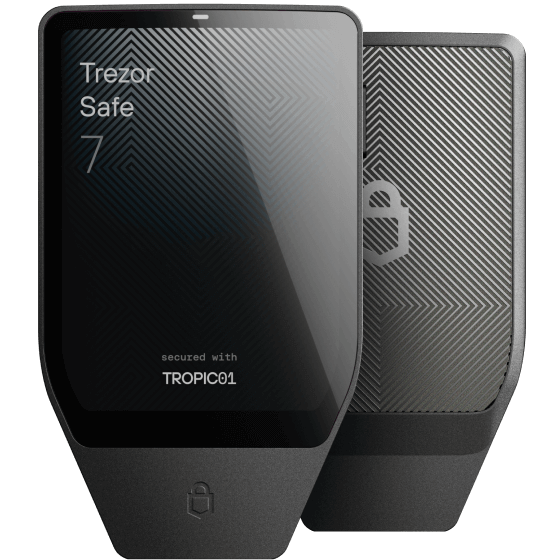
Ledger and Trezor remain mainstream hardware wallet options for reducing private-key compromise risk. For teams and treasuries, Safe is a widely used multisig platform that supports controlled approvals and clearer operational governance.
For transaction review and debugging, Tenderly helps teams simulate transactions, inspect contract interactions, and analyze failures before real funds move. This type of tooling reduces mistakes, especially when interacting with new contracts.
For approval hygiene, Revoke.cash helps users review and remove token allowances that can create future drain risk. This matters because many wallet drains in 2026 are permission problems rather than key theft.
Alerts and Automation
Alerts create edge when they are tied to a decision rule. Chart alerts, wallet movement alerts, and liquidity alerts can all be useful, but only if the user knows what action each alert should trigger.
TradingView alerts cover price and technical levels. Wallet intelligence platforms like Nansen and Arkham can cover entity movement. DeFiLlama covers ecosystem-level metrics. The best practice is to keep alerts minimal and high-signal, because alert fatigue turns a tool into noise.
How to Choose Tools Without Overpaying or Overcomplicating
A simple buyer checklist helps.
First, define the job. If the goal is to track leverage stress, a derivatives dashboard matters. If the goal is to track user growth, an analytics platform matters. If the goal is to avoid operational mistakes, simulation and approval tools matter.
Second, check coverage. Many tools excel on one ecosystem but are weaker on others. The best tools align with the chains and products a user actually touches.
Third, confirm the workflow. A tool that looks impressive but does not integrate into daily routines does not create ROI. In practice, the winning stack is the one the team actually uses under pressure.
Conclusion
The best crypto tools in 2026 are the ones that create clarity at speed. TradingView, CoinGecko, and CoinMarketCap cover daily price and market context. Dune, Nansen, Arkham, Glassnode, and CryptoQuant cover on-chain behavior and entity flows. CoinGlass covers leverage regime context. DeFiLlama and Token Terminal cover DeFi liquidity and fundamentals. Ledger, Trezor, Safe, Tenderly, and Revoke.cash reduce operational mistakes that can cost more than any bad trade.

Btc
Bitcoin
$61.983
price
price

 2.78245%
price change

A smaller, well-chosen stack usually beats an overloaded one. One tool per job, plus a few specialist tools for the user’s specific chain and strategy, is the simplest way to stay consistent and safe.
Previous
Best XRP Block Explorers in 2026: XRPL Transaction Tracking and Network Metrics
Next
Top DEX Tools to Use in 2026: Screeners, Aggregators, and Execution Protection
Written by
Iulian Lesanu
@Iulian
1587 posts
More author posts
HOODIE Review 2026: Robinhood Chain Meme Coin, Tokenomics, Liquidity And Risks
HOODIE launched on Robinhood Chain on July 8, 2026 and quickly became one of the network’s most visible community tokens. Its identity comes from the hooded character used by developer HOODIE JAKE, whose online work already included QR COIN, Base Colors and Kondo. The token therefore arrived with a recognizable creator persona rather than an anonymous logo assembled for a launch. The project has also produced more than a chart and a Telegram group. Its website includes a live tracker,…
10 hours ago
SBI And Solana Form Joint Venture To Build Japan’s Onchain Finance Market
SBI Holdings and Solana Foundation have formed a strategic partnership to develop onchain financial markets connecting Japan’s regulated institutions with blockchain liquidity across Asia. Solana Foundation will join SBI R3 Japan alongside existing shareholders SBI and Sumitomo Mitsui Financial Group, one of Japan’s three megabanking groups. The company plans to change its name to SBI Solana Global, subject to the required corporate procedures. The new partnership puts Solana at the center of the venture’s next growth strategy, expanding a company…
12 hours ago
Pakistan Crypto Rules Face Shariah Review After USDT Fatwa
Pakistan’s crypto regulator has opened a religious review of digital assets after a leading Islamic scholar ruled that purchases using USDT and other cryptocurrencies are impermissible under Shariah law. Bilal Bin Saqib, chairman of the Pakistan Virtual Assets Regulatory Authority, met Mufti Muhammad Taqi Usmani to discuss the treatment of blockchain products as the government builds a licensed market for crypto exchanges and other service providers. Saqib said digital assets should not be placed under a single religious classification, arguing…
14 hours ago
Hyperliquid RWA Open Interest Hits Record $3.6B As Platform Total Reaches $11B
Open interest in real-world asset perpetuals on Hyperliquid has reached a record $3.6 billion, extending a run that has taken stocks, indices and commodities to nearly one-third of the platform’s outstanding positions. Total open interest across Hyperliquid climbed to about $11 billion, its highest level of 2026. The RWA segment now accounts for roughly 33% of the platform total, up from $3 billion at the beginning of June and $2.6 billion in mid-May. Hyperliquid’s RWA open interest reached $3 billion…
14 hours ago
SpaceXAI And Starlink X Accounts Hijacked For $125K SCATMAN Token Dump
The X accounts of Elon Musk’s SpaceXAI and Starlink were hijacked to promote a newly launched meme coin before wallets tied to the attacker sold about $125,000 worth of the token. Two wallets minted 10 trillion SCATMAN and sold the full position for 59 ETH. A second wallet controlled by the same attacker sold another 59.28 million tokens for 14.7 ETH. The transactions brought the combined proceeds to 73.7 ETH. The token sales began after promotional posts appeared on the…
19 hours ago
Ethereum Tests $1,820 Resistance As ETH/BTC Ratio Breaks Higher
Ethereum returned above $1,800 after rebounding from the $1,750 area, putting the market’s next resistance band between $1,820 and $1,850 back in play. ETH traded near $1,809, up about 0.7% over 24 hours, after moving between $1,780 and $1,828. The intraday push briefly cleared $1,820, but the market still needs to hold the level through a stronger daily close before the breakout extends toward $1,850 and $1,900. The move follows an earlier test of the same resistance cluster. Ethereum previously…
2 days ago
Publish your own article
Guest post article. Guaranteed publishing with just a few clicks
START PUBLISHING ADVERTISE WITH USBrowse categories
Explore trending topics in the crypto community right now.
Bitcoin
Bitcoin Loses $63,000 As Channel Rejection Puts $61,700 Support In Focus
Bitcoin fell below $63,000 after another rejection from the upper boundary of its short-term trading channel, shifting the immediate focus toward support near $61,700. BTC traded near $62,880, down about 1.4% over 24 hours, after moving between $62,580 and $64,273. The pullback erased an early-session attempt to hold above $64,000 and returned price below the midpoint of the latest range. The rejection extends a pattern that has repeatedly capped Bitcoin between $64,000 and $65,000. Buyers briefly pushed BTC through $63,000...

Marius Bogdan Dinu
@bdinu89
 @bdinu89
12 hours ago  14 views
Former Meta Engineer Warns Bitcoin Faces Quantum And Miner Fee Risks
Former Meta and Google engineer Patrick Shyu has warned that Bitcoin faces two long-term threats from quantum computing and the declining rewards paid to miners. Shyu, known online as TechLead, called quantum security and miner incentives “two ticking time bombs” that Bitcoin has yet to defuse. He argued that the network lacks a cohesive migration plan for wallets exposed to future quantum attacks. His second concern centers on Bitcoin’s security budget. Roughly 95% of the 21 million BTC supply has...

2 days ago 25 views
Fidelity Sees Bitcoin Nearing Key Long-Term Floor
Bitcoin is moving closer to a long-term support level tracked by Fidelity as BTC trades near the lower end of its 2026 range. Jurrien Timmer, Fidelity’s director of global macro, placed Bitcoin inside a potential accumulation zone, with the market approaching its power law support line. “At $60k it’s getting ever closer to its power law support line,” Timmer wrote. [caption id="attachment_466341" align="aligncenter" width="1200"] Source: Fidelity[/caption] The model tracks Bitcoin’s long-term price expansion against a rising lower support curve. BTC’s...
Marius Bogdan Dinu
@bdinu89
@bdinu89
2 days ago 38 views
Bitcoin Bear Market Holds As Three Onchain Indicators Stay Below Neutral
Bitcoin remains in bear-market territory under a three-indicator onchain model, despite BTC recovering toward $64,100 after its latest move through the low-$60,000 range. Analyst Ali Martinez’s bear-market signal combines adjusted Spent Output Profit Ratio, the Puell Multiple and Reserve Risk. Each metric has been rebased by subtracting one, placing its neutral threshold at zero, while the aSOPR reading is multiplied by 10 to align the three series on the same chart. [caption id="attachment_466334" align="aligncenter" width="1320"] Source: @alicharts via X[/caption] All...
2 days ago 24 views
Ethereum
BitMine Buys 27,801 ETH As Holdings Reach 5.77M
BitMine Immersion Technologies acquired 27,801 ETH over the past week, lifting its total holdings to 5,770,038 ETH as of July 12. The position represents about 4.8% of Ethereum’s 120.7 million circulating supply, placing the company 96% of the way toward its stated goal of controlling 5% of all ETH. The latest treasury update valued the ETH position at roughly $10.5 billion using a reference price of $1,820. BitMine also held 206 BTC, $482 million in cash and marketable securities, a...
9 hours ago 7 views
Ethereum Tests $1,820 Resistance As ETH/BTC Ratio Breaks Higher
Ethereum returned above $1,800 after rebounding from the $1,750 area, putting the market’s next resistance band between $1,820 and $1,850 back in play. ETH traded near $1,809, up about 0.7% over 24 hours, after moving between $1,780 and $1,828. The intraday push briefly cleared $1,820, but the market still needs to hold the level through a stronger daily close before the breakout extends toward $1,850 and $1,900. The move follows an earlier test of the same resistance cluster. Ethereum previously...
2 days ago 29 views
Tom Lee’s BitMine Adds 40,000 ETH From Kraken And FalconX
Tom Lee’s BitMine added another 40,000 ETH from Kraken and FalconX, extending one of the fastest Ethereum treasury accumulation strategies among public-market crypto companies. The purchase was valued at about $71.6 million, putting the implied ETH price near $1,790. The flow came through two large institutional venue transfers rather than a series of smaller spot-market buys, matching the pattern seen in BitMine’s recent ETH accumulation. The move has not yet appeared in a BitMine filing or official treasury update. Until...
6 days ago 52 views
Ethereum Eyes $1,800 Breakout As MVRV And TD Levels Align
Ethereum’s next bullish trigger sits around $1,800, where several onchain and technical levels have converged into the market’s nearest major resistance zone. Ali Martinez placed the key level at the $1,796 0.8 MVRV Pricing Band, with a daily close above that area and a successful support retest strengthening the case for a move toward Ethereum’s realized price near $2,245. The same chart set the TD Sequential resistance trendline near $1,796, placing the technical and onchain bands at almost the same...

6 days ago 42 views
Trading
What Is Agentic Trading? AI Trading Agents, Crypto Automation And Risk Controls
Agentic trading is a form of market automation where an AI agent can analyze data, reason through a goal, use tools, prepare trades, and sometimes execute orders through an exchange API, wallet, smart account, broker connection, or onchain protocol. It moves the conversation beyond simple trading bots because the agent is not only following a fixed trigger. It can combine market data, user instructions, portfolio context, and approved tools before deciding what action fits the rules it has been given....
Marius Bogdan Dinu
@bdinu89
@bdinu89
5 days ago 60 views
What Are Crypto Data Aggregators? Price, Volume, Token Data, And Market Tracking Explained
Crypto data aggregators turn scattered market information into one usable research layer. Instead of checking separate exchanges, DEX pools, block explorers, wallet dashboards, token pages, protocol analytics, and portfolio apps, users can compare price, market capitalization, trading volume, liquidity, supply, exchange pairs, contract addresses, DeFi activity, and on-chain movement from one place. Crypto markets are fragmented across venues, chains, and token versions, so the same asset can trade on centralized exchanges, several decentralized exchanges, multiple networks, and wrapped or bridged...
2 weeks ago 158 views
Telegram Crypto Trading Explained: Wallet Bots, Sniper Bots, Chat-Based Swaps, And Key Risks
Telegram has become one of the most active places where crypto users discover tokens, join communities, follow launch alerts, and execute trades through bots. What started as chat groups and announcement channels has expanded into wallet bots, sniper bots, DEX trading assistants, copy tools, alert systems, portfolio trackers, and chat-based swap interfaces. The appeal is speed: a user can see a token, paste a contract address, set trade parameters, and execute without leaving Telegram. That convenience creates a new risk...
4 weeks ago 230 views
What Is FPSL In Crypto? Fully Paid Securities Lending Explained
Fully Paid Securities Lending, usually shortened to FPSL, is a traditional stock-lending structure that is now appearing inside crypto-native investing platforms. It does not mean staking Bitcoin, lending Ethereum, or supplying stablecoins to a DeFi pool. It means lending fully paid securities, such as stocks or ETFs, that a user already owns through a broker-linked account. The crypto context comes from the user experience. Exchanges and apps that started with digital assets are adding access to U.S. stocks, ETFs, stablecoin-funded...
1 month ago 339 views
Tech
Siiibo Securities Rebrands As Metaplanet Securities After ¥2.1B Acquisition
Siiibo Securities has adopted the Metaplanet Securities name following the July 13 closing of Metaplanet’s ¥2.1 billion ($13.1 million) acquisition. The transaction gives Tokyo-listed Metaplanet full ownership of a registered Type I Financial Instruments Business Operator with an established corporate bond platform and direct access to Japanese investors. Siiibo has handled more than 100 private bond offerings for around 40 companies since its 2019 launch. Its license covers securities underwriting, brokerage, distribution and the handling of public and private offerings....

14 hours ago 14 views
Elon Musk Accuses Sam Altman Of Stealing Apple Technology After OpenAI Lawsuit
Elon Musk accused OpenAI CEO Sam Altman of stealing Apple technology after the iPhone maker filed a federal trade-secret lawsuit against OpenAI and two former Apple employees. “After stealing an open source AI charity, you then stole all of Apple’s phone technology,” Musk wrote on X, before asking Altman what he planned “for an encore.” The attack followed Apple’s lawsuit against OpenAI, hardware chief Tang Yew Tan, former Apple engineer Chang Liu and io Products. The complaint alleges that OpenAI...
2 days ago 42 views
Circle Gets Final OCC Approval To Launch U.S. Trust Bank
Circle received final approval from the Office of the Comptroller of the Currency to establish Circle National Trust, giving the USDC issuer a federally supervised national trust bank. The approval places Circle National Trust under OCC oversight and allows the entity to provide fiduciary digital-asset custody services. Circle said the bank will initially serve Circle and its affiliates, with the ability to expand later to institutional clients such as banks and other regulated financial firms. Circle CEO Jeremy Allaire called...
Marius Bogdan Dinu
@bdinu89
@bdinu89
3 days ago 37 views
Apple Sues OpenAI Over Trade-Secret Claims Around AI Hardware Push
Apple sued OpenAI, hardware chief Tang Yew Tan, former Apple engineer Chang Liu and io Products in federal court, alleging that OpenAI’s consumer hardware push was built on misappropriated Apple trade secrets. The 41-page complaint was filed Friday in the U.S. District Court for the Northern District of California. Apple brought claims under the Defend Trade Secrets Act, California trade-secret law and employment agreements tied to confidential Apple hardware work. Apple alleged that Liu, a former senior system electrical engineer...
3 days ago 39 views
