


Crypto exchange OKX has completed a new strategic investment from Circle, Ripple, Qube Research & Technologies and Standard Chartered's SC Ventures at a $25 billion pre-money valuation, bringing several of its existing infrastructure partners directly onto its shareholder register. The October 6 investment extends the round led earlier this year by Intercontinental Exchange, the parent company of the New York Stock Exchange. OKX did not disclose how much capital the four new investors committed. The valuation remains unchanged from the…












WalletConnect Explained: Sessions, QR Codes, Permissions, And Safer DApp Connections
480 views
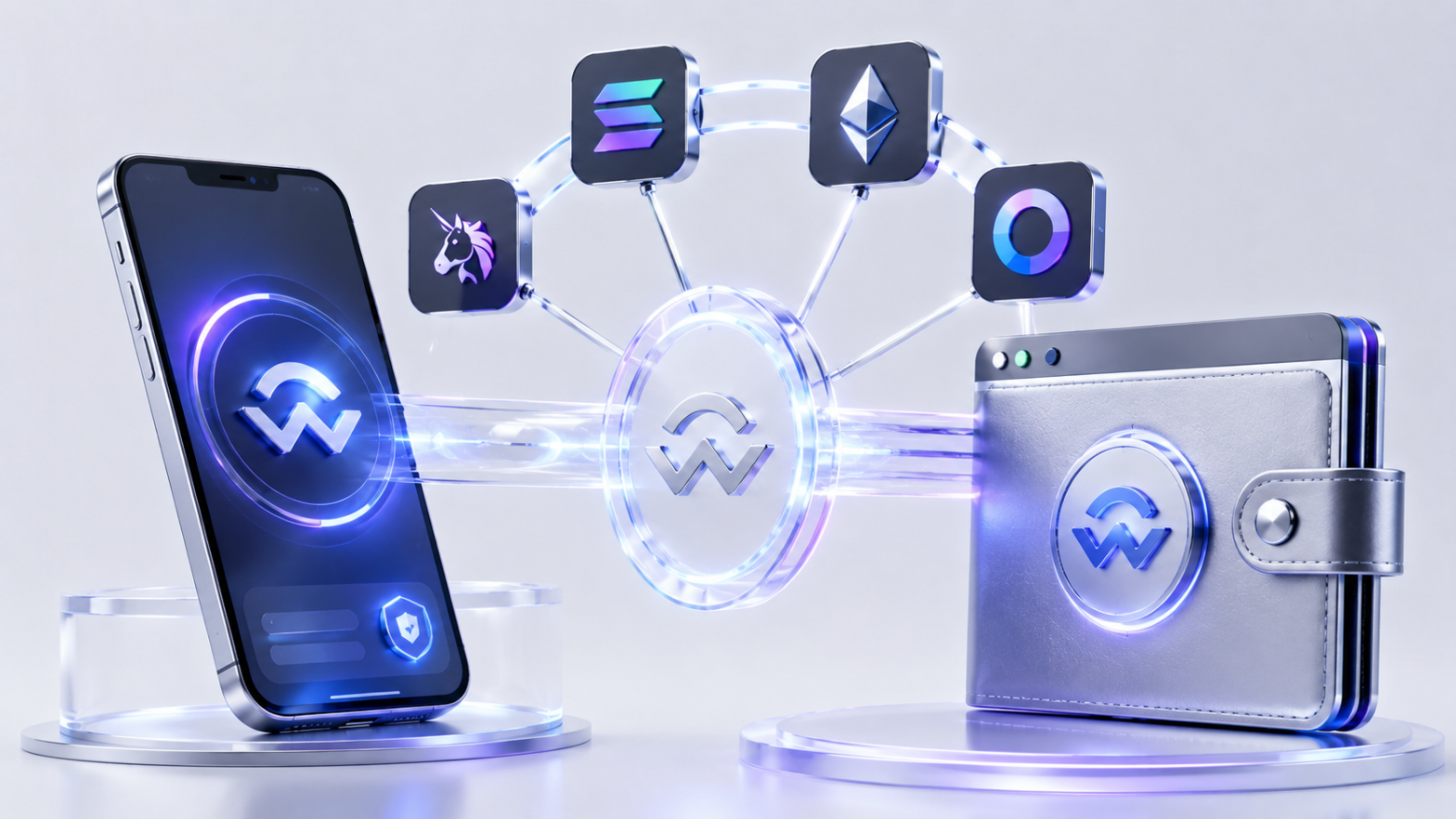

A WalletConnect session can remain active long after a browser tab is closed or a website is forgotten. Many users assume that disconnecting from a page ends the relationship between a wallet and a decentralized application, but that is not how WalletConnect works. The protocol creates an encrypted communication channel that can persist beyond the immediate browsing session, allowing the application to continue sending requests within the permissions that were originally approved.
That persistence is one of WalletConnect’s greatest strengths and one of its most misunderstood risks. The protocol allows users to interact with decentralized applications without exposing private keys to a browser extension or website. A desktop application can communicate with a mobile wallet, a hardware-backed wallet can authorize transactions remotely, and users can move between devices without importing sensitive credentials.
At the same time, WalletConnect does not verify whether a website is trustworthy. It does not inspect smart contracts for malicious behavior. It does not prevent users from approving dangerous token allowances, signing deceptive messages, or authorizing transactions they do not fully understand.
The protocol should therefore be viewed as a secure communications layer rather than a security guarantee. WalletConnect transports requests between wallets and applications. Whether those requests are safe depends entirely on the application, the contract being used, the permissions being requested, and the decisions made by the user.
What WalletConnect Is
WalletConnect is an open-source protocol designed to connect cryptocurrency wallets with decentralized applications through encrypted communication sessions.
When a user clicks a Connect Wallet button on a compatible application, the dApp generates a connection proposal. That proposal contains information about the application and the capabilities it wants to access. The user then opens the proposal through a compatible wallet, usually by scanning a QR code or following a deep link.
The wallet displays the details of the request and asks the user whether the connection should be approved. If approved, an encrypted session is established between the wallet and the application.
From that point forward, the application can send requests through the session. Those requests may involve signing a login message, approving a token allowance, executing a swap, participating in governance, bridging assets, or interacting with a smart contract.
The important distinction is that WalletConnect itself never takes custody of funds. Private keys remain inside the wallet. The protocol simply provides a secure route through which requests and responses can travel.
Within the broader dApp ecosystem, WalletConnect acts as the bridge between the application interface and the wallet. It facilitates communication, but it does not audit contracts, verify websites, or determine whether a requested action is beneficial or harmful.
How A WalletConnect Session Works
Every WalletConnect interaction begins with a pairing process.
The application generates a temporary connection URI and presents it as a QR code or link. When the wallet reads that URI, the two applications establish an encrypted pairing channel that allows them to exchange information securely.
The application then submits a session proposal. This proposal specifies the chains, accounts, methods, and events that the application would like to access.
For example, an EVM-based application may request access to Ethereum, Base, and Arbitrum accounts while asking permission to submit transactions, sign messages, and receive account-change notifications.
The wallet reviews those requests and decides whether they should be approved. Depending on the wallet implementation, the user may be able to approve all requested capabilities, approve only a subset, or reject the proposal entirely.
Once approved, the pairing evolves into an active session. That session receives its own encrypted communication channel and remains available until it expires or is manually disconnected.
Many users assume that closing a browser tab ends the connection. In reality, the session often continues to exist. The wallet may continue listing the application among connected dApps, and the application may continue sending requests whenever the user returns.
This persistence improves convenience because users do not need to reconnect every time they visit a familiar application. However, it also creates long-term trust relationships that users frequently forget about. A site that was legitimate six months ago may no longer be trustworthy today, yet the session may still exist.
Wallet Connection vs Transaction Approval
One of the most important concepts to understand is that connecting a wallet is not the same thing as approving a transaction.
When a WalletConnect session is established, the application gains access only to the capabilities granted during the connection process. It learns which account is connected, which chains are available, and which methods can be requested.
That information alone does not move funds. The actual authority to spend assets, approve tokens, sign messages, or interact with contracts arrives later through individual wallet prompts.
A user might connect a wallet to a decentralized exchange and then spend hours browsing without approving anything. The connection exists, but no financial action has occurred.
Later, the same application may request a token approval, a swap transaction, or a typed-data signature. At that moment the wallet presents a separate prompt requiring user authorization.
Keeping these stages mentally separate is critical. A connection establishes communication. A signature or transaction creates authority.
The guide to transaction signing explains why signatures can carry significant financial consequences even when no immediate transfer appears on screen.
Attackers often exploit this distinction. A malicious application may begin with harmless requests that build trust before eventually presenting a dangerous approval or signature. The WalletConnect session itself remains legitimate while the requested action becomes harmful.
Connect, Session, Request, Approval
| Stage | What Happens | What It Does Not Mean |
|---|---|---|
| Connect initiated | DApp creates pairing URI | Funds have not moved |
| Wallet opens proposal | Wallet reviews metadata and capabilities | Website legitimacy has not been verified |
| Session approved | Accounts, chains, methods, and events become available | Future transactions are not automatically approved |
| Request arrives | DApp asks the wallet to perform an action | The request is not automatically safe |
| User approves prompt | Wallet signs or broadcasts the requested action | The result may not be reversible |
| Session remains active | DApp can continue sending supported requests | User is not obligated to approve them |
| Session disconnected | Communication channel is removed | Existing onchain approvals remain active |
The final distinction is particularly important. Disconnecting a WalletConnect session removes the communication pathway between the wallet and the application. It does not revoke token allowances, NFT approvals, Permit2 permissions, or any other authorization already recorded onchain.
QR Codes And Deep Links
Most WalletConnect interactions begin with either a QR code or a deep link.
On desktop devices, users commonly scan a QR code displayed by the application. The QR code contains a connection URI that allows the wallet to establish the pairing process.
Many newcomers mistakenly assume that scanning a QR code is inherently safe because it appears simple and familiar. In reality, the QR code is merely a transport mechanism. It does not verify the legitimacy of the application behind it.
A malicious website can generate a perfectly functional WalletConnect QR code. The protocol will work exactly as intended while connecting the user to a fraudulent application.
The guide to safe crypto QR-code use explains why QR codes should be treated as data rather than proof of authenticity.
Deep links introduce similar concerns. Instead of scanning a code, the user taps a button that launches a compatible wallet directly. While convenient, deep links create opportunities for confusion because users move rapidly between browsers, wallets, and applications.
A fake website can imitate a legitimate wallet-selection screen. A malicious application can use a similar name or icon to a trusted wallet. Users may approve a connection while believing they are interacting with an entirely different service.
For that reason, verifying the real mobile wallet application is just as important as verifying the website requesting the connection.
Session Permissions And Supported Chains
WalletConnect sessions are built around permissions.
When an application requests access, it specifies which chains and methods it wants to use. The wallet then decides whether those requests should be granted.
A portfolio tracker may need only account visibility. A governance platform may require message signing. A decentralized exchange may need transaction submission capabilities.
The fact that a session supports transaction requests does not mean transactions can occur automatically. Every transaction still requires wallet approval. However, broader permissions allow the application to present a wider range of requests.
Chain selection deserves particular attention.
Many users operate the same wallet address across multiple EVM-compatible networks. Ethereum, Base, Arbitrum, Polygon, and BNB Chain may all display identical addresses while containing entirely different assets and contracts.
The guide to EVM chains explains why address compatibility should never be confused with asset compatibility.
A transaction that appears harmless on one network may interact with a completely different contract on another. Users should therefore verify the active chain every time a transaction or signature request appears.
Persistent Sessions
Persistent sessions are one of WalletConnect’s defining features.
Instead of reconnecting every time a website is visited, users can maintain an ongoing relationship with an application. The dApp recognizes the wallet immediately and can continue requesting actions through the existing session.
This convenience comes with a tradeoff. Over time, users accumulate dozens of forgotten connections. Old mint sites, abandoned games, experimental protocols, and temporary testnet applications often remain connected long after they stop being useful.
The existence of a session does not allow silent signing, but it does allow the application to continue presenting requests. If the frontend becomes compromised or changes ownership, those requests may become very different from the ones originally expected.
Because of this, active DeFi users should periodically review connected applications and remove sessions that are no longer needed.
Common WalletConnect Risks
The most common WalletConnect risks do not originate from the protocol itself. They originate from the applications and environments surrounding it.
Fake QR codes remain a frequent attack vector. A cloned website can generate a legitimate WalletConnect connection while directing users toward malicious approvals. The protocol functions correctly even though the destination is fraudulent.
Fake decentralized applications create a similar problem. A cloned frontend can use genuine WalletConnect infrastructure while presenting deceptive transactions and signatures. Users often mistake the presence of a WalletConnect modal for proof that the application itself is legitimate.
Persistent sessions create another source of risk. Forgotten connections increase the number of applications capable of presenting requests to the wallet. While approval is still required, repeated prompts can encourage careless behavior.
Wrong-chain interactions are equally dangerous. Users frequently focus on token names while overlooking the network being used. Identical symbols can exist across multiple chains, and contracts may differ dramatically despite appearing similar.
Perhaps the most significant risk involves malicious signing requests. Typed-data signatures, Permit2 permissions, token approvals, NFT operator permissions, and marketplace orders can all grant substantial authority without looking like traditional transactions.
The guide to Permit2 permissions demonstrates why a gasless signature can still authorize meaningful asset movement.
Even advanced tools such as transaction simulators and wallet firewalls should be viewed as warning systems rather than guarantees.
Mobile Deep-Link Risks
Mobile devices compress multiple trust decisions into a very small interface.
A user may begin inside a social-media application, open a browser, launch a wallet through a deep link, approve a request, and return to a different browser tab without ever seeing a complete URL.
Attackers exploit this complexity. A malicious link may redirect users through several interfaces before presenting a convincing imitation of a legitimate application. Because mobile screens reveal less information at once, subtle differences become easier to miss.
The comparison of crypto security on iPhone and Android explores how wallets, browsers, operating systems, and application permissions combine to create the overall security environment.
Users should begin from verified domains, avoid pairing through unsolicited messages, and confirm that the wallet and browser context remain consistent throughout the connection process.
Biometric authentication adds convenience, but it does not verify intent. A fingerprint can approve a malicious transaction just as easily as a legitimate one.
WalletConnect And Wallet Role Separation
WalletConnect becomes significantly safer when combined with wallet role separation.
Many experienced users maintain separate wallets for different purposes. A vault wallet stores long-term holdings. A daily wallet handles routine transactions. A sandbox wallet interacts with unfamiliar applications and experimental protocols.
This structure limits the consequences of mistakes. If a risky application receives approval from a sandbox wallet, the damage remains isolated from long-term holdings. If a malicious signature is approved accidentally, only the assets within that environment are exposed.
The wallet role-separation model provides a practical framework for reducing exposure across different categories of activity.
WalletConnect works particularly well within this model because it allows users to keep sensitive keys isolated while interacting with applications through dedicated accounts.
How To Review And Disconnect Sessions
Most modern wallets include a section dedicated to connected applications.
Depending on the wallet, this area may appear under names such as Connected Apps, WalletConnect Sessions, Connections, DApps, or Permissions.
Reviewing these sessions periodically is an important security habit. Users should verify which applications remain connected, which accounts are exposed, and whether the listed domains still match the services originally approved.
Applications that are no longer used should be disconnected. Temporary mint sites, abandoned protocols, and unfamiliar entries deserve particular scrutiny.
Disconnecting a session removes the communication channel between the wallet and the application. It prevents future requests from arriving through that connection.
However, disconnecting should not be confused with revoking permissions already recorded onchain.
When responding to a potentially risky interaction, users should think in layers. The WalletConnect session may need to be removed. Existing token approvals may need to be revoked. In more serious situations, assets may need to be moved to a new wallet entirely.
The guide to crypto incident response explains how to evaluate those situations systematically.
Disconnecting Does Not Revoke Approvals
One of the most common misconceptions surrounding WalletConnect is the belief that disconnecting a session removes all associated permissions.
Consider a user who connects to a decentralized exchange and approves an unlimited USDC allowance. If the user later disconnects WalletConnect, the communication channel disappears, but the allowance remains active inside the token contract.
The approved spender can continue using that authorization according to the contract’s rules.
The same principle applies to NFT operator approvals, Permit2 permissions, marketplace authorizations, governance delegations, and many other forms of onchain authority.
A WalletConnect session is a communication relationship. An approval is blockchain state.
Removing one does not automatically remove the other.
WalletConnect Metadata And Privacy
WalletConnect improves key security, but it does not provide anonymity.
When a wallet connects to an application, the application learns the wallet address and can inspect its public blockchain history. Balances, transactions, NFT holdings, governance activity, and other information may become visible immediately.
Connecting a long-term vault wallet to a social platform, game, or experimental application can therefore reveal far more information than necessary.
The guide to Web3 privacy explores how wallet addresses become increasingly identifiable when linked across multiple services.
Encryption protects communication between the wallet and application. It does not hide public blockchain activity from the application receiving the connection.
For privacy-conscious users, wallet segmentation remains one of the most effective defenses.
WalletConnect And Hardware Wallets
Many WalletConnect-compatible wallets can operate alongside hardware wallets.
In these setups, WalletConnect transports requests to the wallet interface while the hardware device performs the actual signing operation. Private keys remain isolated from browsers and mobile devices.
This arrangement improves security, but it does not eliminate the need for careful review.
Hardware wallets cannot automatically determine whether a contract is trustworthy. They cannot always display complex typed-data requests clearly. Small screens may show abbreviated information that requires additional verification.
The hardware wallet mistakes that affect traditional browser workflows also apply to WalletConnect environments.
Users still need to verify recipients, contracts, approvals, and transaction details before authorizing signatures.
WalletConnect Safety Checklist
| Area | What To Confirm |
|---|---|
| DApp domain | Official domain reached through a trusted source |
| Wallet application | Genuine publisher and verified installation |
| QR code or deep link | Originates from the intended application |
| Session metadata | Matches the expected application and domain |
| Connected account | Appropriate wallet selected for the activity |
| Approved chains | Limited to networks actually required |
| Requested methods | Consistent with the application’s purpose |
| Transaction prompts | Recipient, contract, token, amount, and chain verified |
| Message prompts | Purpose and authority clearly understood |
| Persistent sessions | Retained only when genuinely useful |
| Mobile workflow | Wallet and browser context remain consistent |
| Session management | Old connections reviewed and removed regularly |
| Onchain approvals | Reviewed separately from WalletConnect sessions |
| Browser environment | Dedicated profiles and minimal extensions used |
| Incident response | Suspicious requests rejected and investigated |
Conclusion
WalletConnect is best understood as a secure communication protocol rather than a security product.
It allows wallets and decentralized applications to exchange requests through encrypted sessions while keeping private keys inside the wallet. That architecture makes cross-device interactions significantly more convenient and often more secure than exposing keys directly to browser environments.
However, WalletConnect does not determine whether a request is safe. It does not verify websites, audit contracts, or prevent users from approving dangerous permissions.
The real security decisions occur before and after the connection is established. Users must verify domains, review session permissions, inspect transaction prompts, understand signatures, manage persistent sessions, and revoke unnecessary approvals when appropriate.

Btc
Bitcoin
$82.959
price
price

 3.82611%
price change

When those responsibilities are understood clearly, WalletConnect becomes a powerful tool for interacting with decentralized applications. When they are ignored, the protocol can become the delivery mechanism for exactly the same scams and mistakes that affect every other part of Web3.
Previous
Intent-Based Trading Explained: Solvers, RFQ Fills, Auctions, And MEV Trade-Offs
Next
Crypto Market Snapshot: Bitcoin Holds $72K as ETF Flows Lift Majors
Written by
Gianluca Longinotti
@Gianluca
986 posts
More author posts
OKX Raises Funds at $25 Billion Valuation From Circle, Ripple and Others
Crypto exchange OKX has completed a new strategic investment from Circle, Ripple, Qube Research & Technologies and Standard Chartered's SC Ventures at a $25 billion pre-money valuation, bringing several of its existing infrastructure partners directly onto its shareholder register. The October 6 investment extends the round led earlier this year by Intercontinental Exchange, the parent company of the New York Stock Exchange. OKX did not disclose how much capital the four new investors committed. The valuation remains unchanged from the…
9 hours ago
MetaMask Exits Lido Validators After Infrastructure Security Incident
A security incident affecting part of MetaMask's infrastructure has prompted the wallet provider to exit affected Ethereum validators from Lido while an investigation continues with external security partners. MetaMask has identified no immediate threat to MetaMask wallets and has not disclosed evidence that wallet private keys or user withdrawal credentials were compromised. The precautionary action is limited to validators inside its non-custodial staking operation. The affected staking infrastructure does not control client withdrawal keys. MetaMask can operate validators and perform…
6 days ago
Spain Exempts Self-Custody Crypto From Foreign Asset Reporting
Crypto held in wallets where the owner controls the private keys does not fall under Spain's Modelo 721 foreign-asset reporting requirement, drawing a clear tax-reporting line between self-custody and assets controlled by foreign custodians. The exemption applies whether the assets sit in a hot wallet or cold wallet. What determines the reporting obligation is who controls the private keys, not whether the wallet connects to the internet or what type of device stores the credentials. Crypto only enters the Modelo…
1 week ago
China Says Crypto Anonymity Cannot Shield Criminals From Blockchain Tracing
China’s Ministry of State Security has warned that cryptocurrency does not provide criminals with true anonymity, pointing to permanent blockchain records and offchain data that can connect wallet activity with real-world identities. Crypto’s perceived anonymity is only superficial, the ministry said in a September 28 security warning republished from its official WeChat account. Public blockchain transactions leave an enduring onchain trail, while wallet addresses can be tied to users by combining transaction analysis with exchange records, device identifiers, IP information…
1 week ago
River Financial Sues Blockstream Services Canada Over $6.7M Termination Agreement
River Financial Inc. has sued Blockstream Services Canada ULC for breach of contract, seeking roughly $6.7 million that River alleges has remained unpaid under an agreement terminating the companies' commercial relationship. River filed the complaint in the Northern District of California on September 11. The case names Blockstream Services Canada ULC, not Blockstream Corp, as the sole defendant and requests a jury trial. The disputed amount consists of approximately $3.55 million in prepaid refunds and a separate $3.15 million early…
1 week ago
Sequans Sells Final 314 Bitcoin and Ends Treasury Strategy
French semiconductor company Sequans Communications has sold its final 314 Bitcoin, completing its exit from a crypto treasury strategy that less than a year earlier envisioned eventually accumulating as much as 100,000 BTC. Sequans confirmed the final sale on September 24. The 314 BTC represented the company's entire remaining cryptocurrency balance as of June 30. The company now has no Bitcoin on its balance sheet and no outstanding debt other than obligations connected to government-financed research and development projects. Sequans…
2 weeks ago
Publish your own article
Guest post article. Guaranteed publishing with just a few clicks
START PUBLISHING ADVERTISE WITH USBrowse categories
Explore trending topics in the crypto community right now.
Bitcoin
Robinhood Announces Crypto Perps for U.S. Traders With Up to 10x Leverage
Robinhood is bringing crypto perpetual futures to eligible U.S. customers, extending one of crypto's largest derivatives markets into its domestic trading app. The rollout will support BTC, ETH, SOL, XRP, DOGE, ADA, LINK and HYPE, allowing traders to take long or short positions without an expiration date. Bitcoin and Ether perpetuals will offer leverage of up to 10x, while the remaining six markets will be capped at 3x leverage. The contracts are scheduled to arrive in the coming months. The...

Marius Bogdan Dinu  @bdinu89
 @bdinu89
1 week ago  53 views
Strategy Seeks Daily Dividends for STRF, STRC, STRK and STRD
Strategy is seeking shareholder approval to move STRF, STRC, STRK and STRD to daily dividends, expanding a Digital Credit platform the company uses alongside its 846,000 BTC treasury. Under the proposal, every calendar day would become a dividend record date, including weekends and holidays, with the associated payment made on the next business day. The change would increase payment frequency without altering the annual dividend rates or Strategy's overall dividend obligations. The four securities currently pay on different schedules. STRF,...

2 weeks ago 54 views
Sequans Sells Final 314 Bitcoin and Ends Treasury Strategy
French semiconductor company Sequans Communications has sold its final 314 Bitcoin, completing its exit from a crypto treasury strategy that less than a year earlier envisioned eventually accumulating as much as 100,000 BTC. Sequans confirmed the final sale on September 24. The 314 BTC represented the company's entire remaining cryptocurrency balance as of June 30. The company now has no Bitcoin on its balance sheet and no outstanding debt other than obligations connected to government-financed research and development projects. Sequans...
2 weeks ago 69 views
Shielded Bitcoin Proposal Brings Private Transfers to Bitcoin Without a Soft Fork
Researchers have proposed a new privacy system that would allow Bitcoin-denominated value to move through encrypted transfers anchored directly to Bitcoin without requiring a soft fork or separate blockchain. The September 24 Shielded Bitcoin paper, authored by Clara Shikhelman, Mikhail Komarov and Aleksei Moskvin of [[alloc] init], describes a metaprotocol where amounts, senders, recipients and links to previously spent notes remain hidden while transaction validity can still be independently verified. Bitcoin itself would publish and order the protocol data. Its...
2 weeks ago 55 views
Ethereum
Abstract Ethereum Layer 2 to Shut Down on December 15 With $47.9M Still Secured
Abstract, the consumer-focused Ethereum Layer 2 backed by Pudgy Penguins parent Igloo Inc., will shut down on December 15, 2026, ending a nearly three-year effort to build a blockchain around consumer crypto. Users must move their assets before the deadline through Abstract’s official Migration Hub or native bridge. Assets remaining on the network after December 15 will become inaccessible. The native bridge currently carries an expected withdrawal delay of roughly three hours. The October 6 wind-down notice also warned users...
Marius Bogdan Dinu
@bdinu89
@bdinu89
10 hours ago 16 views
Ledger Patches Ethereum Signing Flaw Before Researchers Disclose It
Ledger has patched a vulnerability in its Ethereum hardware-wallet app that could allow a malicious dApp to replace a transaction during the approval process while the device continued showing users the transaction they originally reviewed. Security firm TestMachine disclosed the signature-substitution flaw on August 21 after reproducing it on Ledger hardware. Ledger had already shipped Ethereum app version 1.22.2 on August 12, with its release history listing security fixes for the update. Malicious dApp Could Change the Transaction Before Signing...
1 month ago 140 views
Jesse Pollak Pushes Back On Coinbase ETH Selling Criticism, Points To 150K ETH Treasury
Base creator Jesse Pollak has pushed back against criticism that Coinbase is selling ETH while benefiting from Ethereum, pointing to the exchange’s roughly 150,000 ETH corporate position and years of investment across the network. Pollak argued that Coinbase has held about 150,000 ETH through multiple market cycles, while describing the company as the largest ETH holder outside dedicated digital asset treasury companies by a wide margin. Coinbase’s latest regulatory filing backs up the scale of that position. The company held...
2 months ago 171 views
Tornado Cash Phishing Frontend Drains 1,010 ETH From User
A crypto user lost 1,010 ETH after following an old Tornado Cash bookmark into a phishing frontend that captured the private withdrawal credentials needed to access the deposited funds. The victim deposited the ETH into legitimate Tornado Cash contracts, but the malicious interface obtained the private note generated during the process. The attacker then used those credentials to withdraw the assets within roughly 12 hours without compromising the underlying Tornado Cash smart contracts. Phishing Frontend Targeted Private Withdrawal Notes Tornado...
Marius Bogdan Dinu
@bdinu89
@bdinu89
2 months ago 146 views
Trading
5 Best Crypto APIs for Trading Bots in 2026
A crypto trading bot is a chain of dependencies. It reads a position, prices it, decides, places an order, and confirms settlement. Every one of those steps is an API call, and a failure at any single step stops the strategy. The provider choice shapes what a bot can actually do more than the strategy logic does. The common mistake is searching for one API that covers everything. No such API exists in 2026. Market data providers do not route...
2 months ago 234 views
Best Prediction Markets Alternatives: Outpoll, Limitless, Myriad, Manifold
Polymarket and Kalshi helped turn prediction markets into a mainstream trading category, but neither platform fits every trader. Access varies by country, market selection can lean heavily toward certain topics, and the tools available for entering, managing, and automating positions differ sharply across platforms. The strongest alternatives are not identical copies. Some emerging prediction markets platforms focus on professional order controls, some concentrate on fast crypto and financial markets, and others use onchain infrastructure or play-money forecasting. Users unfamiliar with...
2 months ago 250 views
How to Get a Funded Crypto Trading Account in 2026 Step by Step
A funded crypto trading account gives a trader access to more notional capital after they prove they can follow a firm’s risk rules. The usual route starts with a paid crypto prop firm challenge that requires a profit target without breaching daily or overall loss limits. Passing is not only about making money. Drawdown control, minimum trading days and rule compliance determine whether the account survives. The evaluation fee can be lost, and crypto prop firms use different account models,...

3 months ago 334 views
How To Trade Tokenized Stock Perps: Leverage, Funding And Risks
Tokenized stock perps allow traders to take long or short exposure to companies, ETFs and equity indexes through crypto-native derivatives markets. Positions can use stablecoin collateral, remain open without an expiry date and continue trading when the main stock exchange is closed. The trader receives price exposure, not ownership of the referenced shares. The interface often looks identical to a crypto perpetual futures market. The risk does not. A stock-linked contract can remain active overnight, through weekends and during holidays...
Marius Bogdan Dinu
@bdinu89
@bdinu89
3 months ago 349 views
Tech
OKX Raises Funds at $25 Billion Valuation From Circle, Ripple and Others
Crypto exchange OKX has completed a new strategic investment from Circle, Ripple, Qube Research & Technologies and Standard Chartered's SC Ventures at a $25 billion pre-money valuation, bringing several of its existing infrastructure partners directly onto its shareholder register. The October 6 investment extends the round led earlier this year by Intercontinental Exchange, the parent company of the New York Stock Exchange. OKX did not disclose how much capital the four new investors committed. The valuation remains unchanged from the...
9 hours ago 18 views
River Financial Sues Blockstream Services Canada Over $6.7M Termination Agreement
River Financial Inc. has sued Blockstream Services Canada ULC for breach of contract, seeking roughly $6.7 million that River alleges has remained unpaid under an agreement terminating the companies' commercial relationship. River filed the complaint in the Northern District of California on September 11. The case names Blockstream Services Canada ULC, not Blockstream Corp, as the sole defendant and requests a jury trial. The disputed amount consists of approximately $3.55 million in prepaid refunds and a separate $3.15 million early...
1 week ago 53 views
CoinMarketCap Acquires CoinGlass to Expand Crypto Derivatives Data
CoinMarketCap has completed its acquisition of CoinGlass, bringing one of crypto's largest derivatives analytics platforms into the Binance-owned market-data business. Financial terms were not disclosed. CoinGlass tracks open interest, funding rates, liquidations, long-short positioning, options and ETF flows across 28 exchanges and more than 2,500 instruments. The platform serves more than 5 million monthly users and 10,000 API customers. CoinMarketCap reports roughly 115 million monthly users, giving the combined operation a substantially larger distribution channel for derivatives positioning alongside spot...
2 weeks ago 65 views
Binance Buys $100M Circle Stake Under Five-Year USDC Deal
Binance has invested $100 million in Circle Internet Group while signing a new five-year commercial agreement that expands USDC distribution across the exchange's products and global user base. Circle issued and sold Binance 1,237,011 Class A shares on September 17 at $80.84 per share, putting the private placement at approximately $100 million. Binance is subject to a two-year restriction on transferring the shares, with specified exceptions, while retaining the voting rights attached to the stock. The equity purchase gives Binance...
2 weeks ago 60 views
